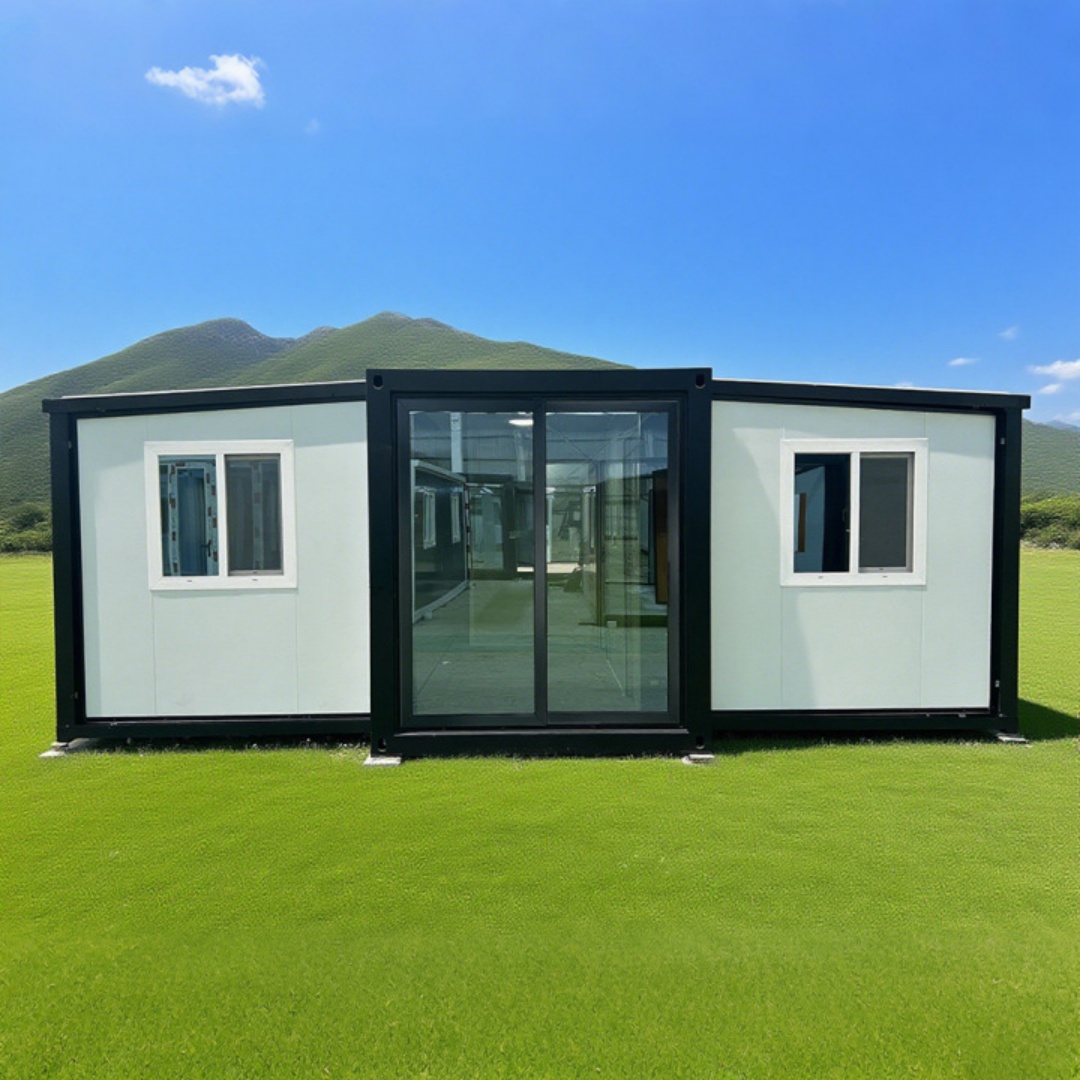
HG Prefab foldable expandable container homes — built to last, delivered worldwide.
A folding container home is the easiest building in the world to site somewhere the grid does not reach, and the hardest one to keep comfortable once the sun goes down. That gap is what a microgrid closes. A microgrid is simply a local power system that generates, stores and distributes its own electricity and can run either connected to the utility or completely isolated from it — which is exactly the situation on a ranch boundary, a coastal plot, a mining lease, a farm or a tourism site where the nearest pole is two kilometres away and the utility wants a six-figure sum to extend it.
This guide walks through the design in the order an installer actually works: load first, then array, then battery, then inverter, then backup, then the wiring that ties several units together. It assumes no prior electrical knowledge but does not skip the numbers. It complements our solar power setup guide, our electrical load planning guide and our off-grid water guide, which together cover the three utilities an autonomous site has to solve.
What a Microgrid Means for a Container Home
One unit: a standalone nanogrid
For a single home, the honest word is nanogrid — one generating source, one battery bank, one inverter and one distribution board serving one building. Everything is behind a single main breaker, and when the battery is empty the generator starts or the lights dim. That simplicity is a feature: there is one point of failure, one maintenance routine and one screen to read.
Where a single unit still deserves the word microgrid is when the loads are genuinely mixed. A 20FT winter-finish unit used as a caretaker cottage has refrigeration, heating, water pumping and communications, all of which must survive a three-day storm, plus a workshop load that can be shed at will. The moment you separate critical loads (fridge, pump, lights, communications) from sheddable loads (washing machine, power tools, water heater), you are doing microgrid design: you are deciding what runs on the last 20% of the battery.
A cluster of 2-5 units: a true microgrid
Two to five units on one site is a different problem, and a more economical one. Five independent systems mean five inverters, five battery banks and five generators, each sized for its own worst-case evening. Shared, the same five units can be served by one bank about 60-70% of the summed capacity, because the units never peak simultaneously: one family cooks at seven, another at eight, the third is away for the weekend.
The shared architecture has four parts. A central plant enclosure holds the batteries, the inverter/charger stack and the generator, ideally in a ventilated, fire-separated room or a small service container. A common AC bus distributes single-phase power to each unit. Per-unit protection gives every home its own isolator and RCBO so a fault in one unit does not darken the whole cluster. And a controller — usually the inverter/charger's own logic plus a shunt-based battery monitor — decides when to start the generator, when to shed non-critical loads and when to curtail the water heater. Our container hotel guide covers the same logic at commercial scale.
Step 1: Load Calculation for 20FT/30FT/40FT
Everything downstream is sized from one number: average daily energy in kWh. You get it by listing every appliance, multiplying rated watts by hours of use per day, and summing. Do this before you look at a single panel, because it is the number that decides whether your budget is $4,000 or $18,000.
Typical daily consumption by unit size
- 20FT (about 36 m², 1-2 occupants). LED lighting 0.4 kWh, fridge/freezer 1.2 kWh, phone and laptop charging 0.5 kWh, 12 V water pump 0.4 kWh, router and Starlink 0.4 kWh, TV and audio 0.5 kWh, induction hob and kettle 1.5 kWh, microwave 0.4 kWh. Base total is roughly 5.3 kWh/day. Add a small split air conditioner for four hours and you reach 8-9 kWh; add an instant electric water heater and you add another 3-4 kWh.
- 30FT (about 56 m², 2-4 occupants). The same base loads scale slightly with floor area and occupancy — lighting 0.7, refrigeration 1.6, cooking 2.5, electronics 1.0, pump 0.5 — giving a comfortable base of 8-10 kWh/day, and 13-16 kWh with air conditioning and a washing machine in regular use.
- 40FT (about 76 m², 3-6 occupants or a rental unit). Expect 12-16 kWh/day base and 18-24 kWh/day when the air conditioner, dishwasher, tumble dryer and an electric water heater are all in the specification. At that level you are no longer designing a cabin system; you are designing a small commercial installation and should size accordingly.
Two multipliers catch people out. First, simultaneity and surge: your inverter must handle the sum of what runs at once plus motor inrush, not the daily average. A 1.5 kW pump and a 2 kW kettle and a 1.2 kW microwave at the same moment is a 4.7 kW continuous demand from a home averaging 1 kW. Second, seasonality: winter brings shorter days, lower sun angles and often more heating load at exactly the moment the array produces least. Design for the worst month, not the annual mean.
Step 2: PV Array Sizing — Roof versus Ground Mount
Array size follows from daily energy and local solar yield. Divide daily kWh by peak sun hours, then derate by about 1.35 to cover wiring losses, soiling, temperature coefficient and the fact that panels rarely see their laboratory conditions.
Array kWp ≈ (daily kWh ÷ peak sun hours) × 1.35
In a 5.0 sun-hour climate, a 6 kWh/day 20FT needs (6 ÷ 5) × 1.35 = 1.6 kWp. The same house in a 3.0 sun-hour northern-European or Pacific-Northwest winter needs (6 ÷ 3) × 1.35 = 2.7 kWp. That single line explains why two identical houses 1,000 km apart need completely different systems.
Roof mount and the solar-ready roof option
Modern 550-600 W modules are roughly 2.3 m × 1.1 m, so a kilowatt needs about 4 m² of unshaded roof. A 20FT roof carries 1.5-2.0 kWp, a 30FT around 2.5-3.0 kWp and a 40FT 3.5-4.5 kWp — though only if you keep clear of skylights, vents and the folding hinge line.
This is where the build specification matters. HG Prefab offers a solar-ready roof option with the structural provision and the penetration details already engineered, and factory pre-wiring that runs a conduit and MC4-terminated home-run from the roof junction box down to the plant space before the unit ever leaves the factory. The practical value is large: no one drills through a finished roof on a windy site, the cable route is inside the insulated envelope rather than taped to the outside wall, and the array can be commissioned the same week the unit is unfolded. Specify it at order stage — it is a production decision, not a retrofit.
Ground mount
Once the load exceeds what the roof can carry, go to the ground. A ground array gives you the correct tilt for your latitude (or steeper, which favours winter yield), free airflow behind the modules so they run cooler and produce more, access for cleaning and snow removal, and room to add a string later. It costs more — structure, concrete, trenching and DC isolators — but on a cluster it is nearly always the right answer, and a tilted frame doubles neatly as a carport or a shaded work area.
Step 3: Battery Storage — Chemistry and Sizing
Why LiFePO4 is now the default
Lithium iron phosphate has displaced lead-acid for occupied homes for four reasons that compound. Cycle life: 4,000-6,000 cycles at 80-90% depth of discharge against 500-1,200 cycles at 50% for flooded or AGM lead-acid. Usable capacity: you can take 90% out of a LiFePO4 bank every night, versus 50% from lead-acid before you start destroying plates, so a "10 kWh" lithium bank delivers about 9 kWh and a "10 kWh" lead-acid bank delivers 5. Charge rate: lithium accepts 0.5-1.0C, so a short generator run or a brief break in the clouds actually refills it, where lead-acid needs hours of absorption charging. Environment: an integrated BMS manages cell balance and temperature, and the chemistry tolerates the 40-50 °C that the inside of a steel container reaches in summer far better than lead-acid does, which loses roughly half its life for every 8 °C above 25 °C.
Lithium needs correct settings to earn that life: charge to about 3.55-3.60 V per cell, avoid charging below 0 °C unless the pack has a low-temperature cutoff or self-heating, and keep the bank in a ventilated space out of direct sun. Lead-acid is still defensible for a unit visited twice a year where the replacement cost is somebody else's problem, but it is no longer the value choice.
Sizing the bank
Battery capacity is about autonomy — how many sunless days you want to ride through — not about daily consumption alone.
Usable kWh = daily kWh × days of autonomy ÷ depth of discharge
A 6 kWh/day 20FT with two days of autonomy at 85% DoD needs 6 × 2 ÷ 0.85 = 14 kWh of nominal capacity. In a benign climate one day is acceptable; in a monsoon or snowbelt winter, three. Note what happens if you add a generator: with a 7 kW genset available, autonomy can drop to one day and the bank to 7 kWh, because the generator — not the battery — becomes your bad-weather insurance. That trade is usually the cheapest single decision in the whole design.
Step 4: Inverter/Charger Selection
The inverter/charger is the heart of the system: it makes AC from the battery, charges the battery from solar or generator or grid, and decides what to do when two of those are available at once. Specify on four criteria.
- Continuous and surge rating. Size continuous output at 1.25-1.5× your realistic simultaneous load. A 20FT with a 4.7 kW worst-case simultaneous load wants 6 kW continuous; a 30FT cluster hub wants 8-10 kW. Check the 3-second and 100 ms surge figures too, because well pumps, compressors and fridges draw 4-7× running current at start.
- Waveform and voltage. Pure sine wave only, at your local voltage and frequency — 230 V/50 Hz or 120 V/60 Hz split-phase. Modified sine wave damages motor windings and some electronics and should not appear in a dwelling.
- DC input window. 48 V is the standard for anything above about 3 kW; 12 V and 24 V force currents that make cabling and fusing expensive and lossy. Confirm the MPPT solar charge controller input voltage range suits your string configuration — a 450 V or 600 V maximum open-circuit voltage unit gives you long strings and thinner cable.
- System topology. A hybrid inverter/charger with an integrated MPPT and a generator input is simplest for one unit. For a cluster, use a stackable or parallel-capable unit so you can add a second inverter rather than replace the first, and confirm it supports generator auto-start on both low state-of-charge and high load.
Match the distribution board to the same thinking: RCBOs on every final circuit, a type II surge arrestor on the incoming AC and on the DC array, and an earth electrode at the plant enclosure. Our plumbing and electrical services guide covers the in-unit board and cable routes in detail.
Step 5: Generator Backup and Auto-Start
A generator is not an admission of defeat; it is what lets you shrink the battery. Sizing rule: genset kW ≈ 1.5× the inverter's continuous charge rate, or enough to carry the whole house load plus charging at once, whichever is larger. For most single units that is 5-7 kW; for a 2-5 unit cluster, 10-15 kW.
Choose a diesel set for fuel availability and long run hours in remote areas, or an LPG/petrol inverter generator for quieter, cleaner operation at a site you visit often. Wire the auto-start so it triggers on state of charge (below 30-40%), on load (demand above the inverter's rating), and on a weekly exercise timer so it runs for 15 minutes whether or not it is needed — the exercise cycle is what stops a generator failing on the one day you need it. Run it at 60-80% load, never at idle; wet-stacking an underloaded diesel is the most common cause of premature failure. Add a fuel polishing habit, a water separator and a block heater below freezing.
Linking Multiple Units into a Shared Microgrid
Cabling, protection and earthing
Treat the cluster as a small utility and keep the topology boring. Put generation, storage and protection in one place, then distribute.
- Keep DC short and AC long. DC loses energy and needs expensive over-current protection, so site the battery and inverter within about 15 m of the array's combiner box, and run AC to the units instead. On a 30-40 m run, size the armoured sub-main for under 3% voltage drop and go up a cable size rather than arguing about it.
- Bury it properly. Armoured cable in a duct at 600 mm, or 450 mm with a protective cover and warning tape, in a trench shared with the water line but separated from it. Our foundation comparison covers trench timing relative to the pad.
- One isolator per unit. A lockable local isolator plus RCBOs in each unit's board means an electrician can work on one home without cutting power to the cluster, and a fault is contained to one distribution board.
- Earthing and bonding. A single earth electrode system at the plant enclosure, TN-S or TT per your local code, with the array frame, the generator frame and every unit's chassis bonded to the same reference. Mixed earths cause nuisance RCD trips and, worse, real shock risk.
- Segregate the DC. Battery and PV DC circuits need DC-rated breakers and isolators — never reuse AC breakers on DC, because DC does not cross zero and an AC breaker will not extinguish the arc.
- Label everything. A laminated single-line diagram on the plant room door is worth more than any amount of documentation in a drawer when a contractor arrives two years later.
Monitoring and Load Management
The cheapest reliability upgrade in any microgrid is a shunt-based battery monitor and a system dashboard. Modern hybrid inverters expose state of charge, PV production, load, generator hours and per-string current over Wi-Fi or RS485 to a phone app, and that visibility changes behaviour: people stop running the tumble dryer at dusk once they can see the battery falling.
Add three automations and the system largely runs itself. Load shedding on low SoC drops the water heater, the pool pump and the EV charger in a defined order. Generator auto-start covers the rest. And smart diversion sends surplus solar to the water heater or a resistive element instead of curtailing the array, which is free energy you have already paid for. Our running costs guide shows what these decisions do to the annual bill.
System Size, Units Supported and Indicative Cost
The table below is a starting brief for budgeting, not a quotation. Costs are equipment only, excluding freight, taxes and installation labour, and assume a mid-range LiFePO4 bank and a quality hybrid inverter/charger.
| System tier | PV array | Battery (LiFePO4) | Inverter/charger | Units supported | Typical daily load | Generator | Indicative equipment cost |
|---|---|---|---|---|---|---|---|
| Tier 1 — Weekend 20FT | 1.6-2.0 kWp roof | 5 kWh | 3 kW | 1 × 20FT | 4-6 kWh | Optional 3 kW portable | $4,500-$7,000 |
| Tier 2 — Full-time 20FT/30FT | 3.0-4.0 kWp roof + ground | 10-14 kWh | 5-6 kW | 1 × 20FT or 30FT | 8-12 kWh | 6 kW auto-start | $9,000-$14,000 |
| Tier 3 — Large 40FT | 5.0-6.5 kWp roof + ground | 20 kWh | 8 kW | 1 × 40FT | 14-20 kWh | 8-10 kW auto-start | $15,000-$22,000 |
| Tier 4 — Cluster hub, 2-3 units | 8.0-10.0 kWp ground | 30 kWh | 10-12 kW (parallel-capable) | 2-3 units, mixed 20FT/30FT | 20-30 kWh | 10 kW auto-start | $24,000-$34,000 |
| Tier 5 — Cluster hub, 4-5 units | 12.0-16.0 kWp ground | 40-60 kWh | 15-20 kW (stacked) | 4-5 units, mixed sizes | 35-50 kWh | 15 kW auto-start | $36,000-$52,000 |
Set that against the building itself. Factory prices are 20FT $7,200-$9,800; 30FT $10,500-$14,500; 40FT $12,500-$16,500. A full-time 20FT at $8,500 with a Tier 2 system at $11,500 lands near $20,000 for a self-powered home before freight, taxes and foundation — and the power system is the part you can phase, starting with the roof array and pre-wiring and adding battery capacity a year later.
Installation Sequence and Maintenance
Get the order right and the commissioning is a day's work. Prepare the pad, the cable ducts and the earth electrode while the unit is in transit. Set the unit, expand it and lock it before any electrical work starts. Terminate the factory pre-wired roof circuit into the combiner box, land the battery and inverter in the plant space, then have a licensed electrician test, certify and commission.
On delivery day, plan the machine access. Yes — a crane or forklift is required to offload the folded unit from the truck. Once it is set in position, four workers can unfold and assemble the main structure in about 2 hours. Our assembly day timeline walks through that schedule hour by hour, and our crane offloading guide covers machine selection and site access.
Afterwards the routine is short. Clean modules quarterly, or after any dust storm or heavy pollen fall, and re-torque the array clamps and the DC terminals once a year. Check the battery BMS app monthly for cell imbalance and confirm the SoC readout against a measured voltage at least twice a year. Exercise the generator weekly, change its oil on hours rather than calendar, and keep the tank full with stabilised fuel. Re-check the earth electrode resistance and RCBO test buttons annually. Done consistently, the array will still be producing above 85% of nameplate at year 20 and the LiFePO4 bank will need replacing somewhere around year 10-15.
Choosing the Model for an Off-Grid Site
Match the unit to the load you actually intend to run. A compact 20FT mountain cabin at roughly 36 m² pairs naturally with a Tier 1 or Tier 2 system and a roof-mounted array. The 30FT white folding house at about 56 m² is the middle option for a family running air conditioning and a washing machine. Where the site is a rental or a shared family compound, the 40FT teak retreat at roughly 76 m² should be specified with the solar-ready roof and factory pre-wiring from the outset. And where you want a roofline that carries a larger array, the 40FT white gable unit gives you two pitched faces to work with. Browse the full folding container home range with your daily kWh figure in hand.
Designing an off-grid container home?
HG Prefab, made by Henan Huangang Machinery Equipment Co., Ltd., builds 20FT, 30FT and 40FT folding expandable container houses with a solar-ready roof option and factory pre-wiring for solar, battery and generator circuits, shipped folded worldwide at a standard container shipping footprint. Send us your location, your appliance list or an estimated daily kWh, and the number of units on the site, and we will size the PV array, battery bank and inverter/charger with you and confirm the pre-wiring schedule for your quote. Email hgmechequip@gmail.com or WhatsApp +86 191 0388 7380. Full range on the products page.
Browse modelsFrequently Asked Questions
How much solar and battery capacity does a 20FT off-grid container home need?
A comfortably equipped 20FT folding unit typically uses 5-7 kWh per day. Covering that from solar in a reasonable climate means roughly 1.5-2.0 kWp of PV and a 5-10 kWh LiFePO4 battery bank sized for about two days of autonomy, paired with a 3 kW inverter/charger so the air conditioner or a kettle does not trip it. Add a 20-30% design margin for winter, shading and battery ageing, and spec a generator input so the inverter/charger can top the bank up during a long cloudy spell.
Should the solar panels go on the roof or on a ground mount?
Roof mount is the cleanest option when the roof area is enough: there is no extra structure, no trenching, the panels are out of reach and the array travels with the unit because HG Prefab offers a solar-ready roof option with factory pre-wiring from the roof junction box down to the plant room. Roof area is the limit, though — a 20FT roof carries about 1.5-2.0 kWp, so a 40FT or a cluster that needs 4 kWp or more will need a ground mount or a solar carport as well. Ground mounts cost more but give you the correct tilt, easier cleaning, room to expand and a shaded outdoor area underneath.
Why LiFePO4 rather than a cheaper lead-acid battery bank?
LiFePO4 costs roughly two to three times more per kWh upfront but delivers 4,000-6,000 cycles at 80-90% depth of discharge compared with 500-1,200 cycles at 50% for lead-acid, so the usable capacity is larger and the bank lasts eight to fifteen years instead of three to five. It also charges three to five times faster, holds voltage under load, needs no watering or ventilation, and tolerates the high temperatures inside a container far better. For a home you occupy every day, LiFePO4 is now the default choice.
Can two to five container units share one microgrid?
Yes, and it is usually cheaper per unit than five separate systems. The cleanest topology is a common AC bus: each unit keeps its own inverter/charger and distribution board, and a buried armoured sub-main from a central plant room feeds them through individual RCBOs and a local isolator per unit. One oversized battery bank and one generator serve the whole cluster, which is far more efficient because the units never all peak at once. Keep DC runs short — under about 15 metres — and put the batteries, inverter and generator together in one ventilated, fire-separated plant enclosure.
Does the microgrid package change delivery or installation?
The unit still ships folded at a standard container shipping footprint, so freight is unaffected, but the solar-ready roof and factory pre-wiring have to be on the order before production starts because they are built into the shell, not added afterwards. On site the foundation and the cable ducts must be ready in advance. Yes — a crane or forklift is required to offload the folded unit from the truck. Once it is set in position, four workers can unfold and assemble the main structure in about 2 hours, after which the pre-wired circuits are terminated, tested and commissioned by a licensed electrician.
Talk to HG Prefab
Henan Huangang Machinery Equipment Co., Ltd. (HG Prefab) manufactures folding expandable container homes in 20FT, 30FT and 40FT sizes and ships them folded worldwide. Factory prices are 20FT $7,200–$9,800, 30FT $10,500–$14,500 and 40FT $12,500–$16,500. For an off-grid project, send us your location, a list of the appliances you intend to run, an estimate of daily kWh if you have one, and how many units the site will eventually have — those four items are enough for us to size the array, the battery bank and the inverter/charger and to schedule the solar-ready roof and pre-wiring into your build.
Email hgmechequip@gmail.com or message us on WhatsApp at +86 191 0388 7380. You can also browse the full range at products.html or request a quotation at contact.html.